Download Tone Empire Goliath V3 v3.1.0 for Mac free. It is the full latest version setup of Goliath V3 for macOS. Goliath V3 is a professional analog channel strip plugin. It is built for Mac producers and mix engineers who want real analog saturation, compression, and EQ inside a single plugin.
Review of Tone Empire Goliath V3
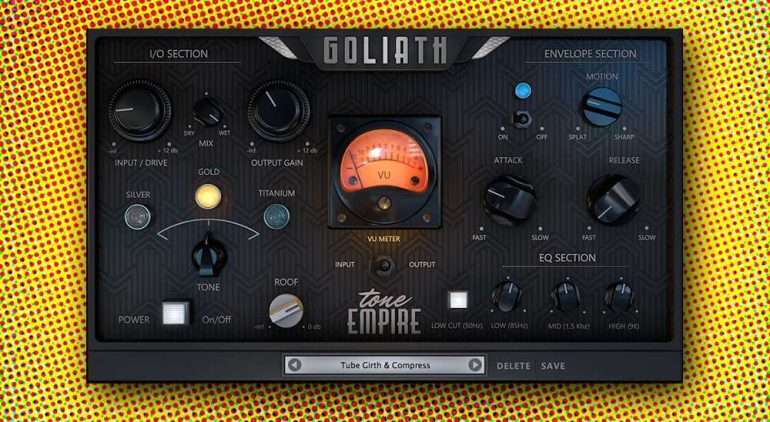
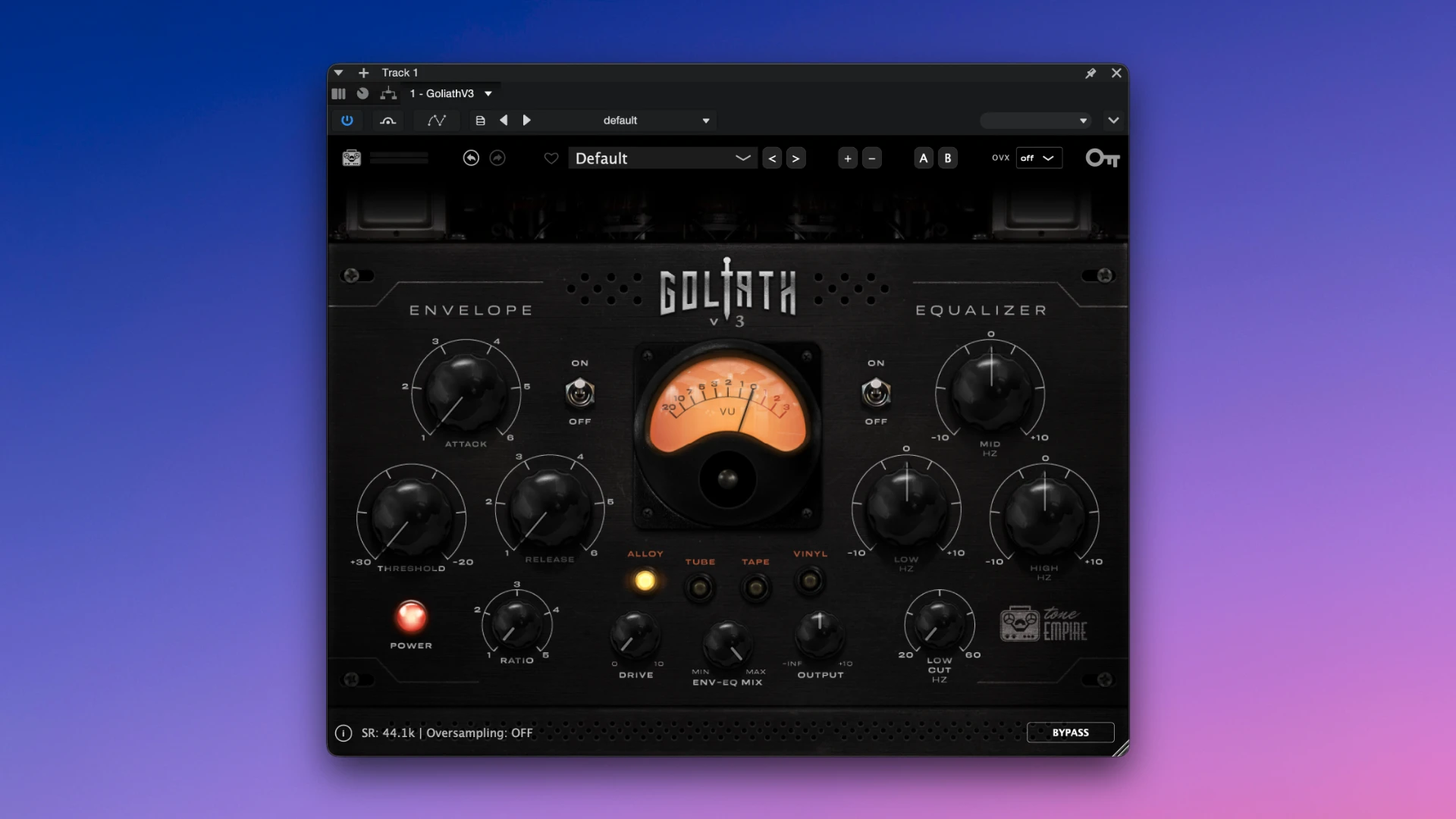
Tone Empire Goliath V3 is the most advanced version of Tone Empire’s top-selling analog saturation plugin for Mac. It combines four analog saturation models, a full FET compressor, and a 3-Band EQ into one unified channel strip. The plugin is powered by Tone Empire’s proprietary Multi Convolution and Component Modelling engine. This means every mode sounds like real hardware, not a digital approximation. Mac producers face a common frustration. They stack multiple plugins to get analog color, dynamics control, and tonal shaping. This slows down the workflow. It adds CPU load. It creates inconsistent results across different DAWs. Goliath V3 solves this directly. You get saturation, compression, and EQ in one plugin. One signal chain. One workflow. The plugin runs natively on Apple Silicon and Intel Macs. It supports Logic Pro, Pro Tools, Ableton Live, GarageBand, Studio One, and more through AU, VST3, and AAX formats.
Tone Empire is based in Irvine, California. The company launched in 2018 with the original Goliath plugin. It quickly became their best-selling product. V3 is a complete rebuild of the sound engine from the ground up. If you have used V1 or V2 before, V3 is a significant step up in both realism and control.
Goliath V3 runs on macOS 10.13 High Sierra and all newer versions including Ventura, Sonoma, and Sequoia. It installs as a Universal 2 Binary package. This means the plugin runs natively on both Apple Silicon M-series Macs and older Intel Macs without Rosetta translation. One license activates on up to three machines simultaneously. This covers your studio desktop, your MacBook, and your home setup.
Alloy Saturation Model
The Alloy mode is modeled on a British 1081 console signal chain. It captures the characteristics of Nickel, Iron, and Steel transformer types. The result is clean, silky analog processing with a distinct high-end sheen. This mode is ideal for adding console glue to a mix without heavy coloration. Use it on drum buses, mix buses, or any source where you want subtle analog character without obvious saturation. The transformer modeling preserves the transient integrity of the original signal while adding that unmistakable high-end presence that analog consoles are known for.
Tube Saturation Model
The Tube mode is modeled on a modern and classic valve processing chain with an AIR circuit. It generates 2nd order harmonics that sit naturally in the mix. This type of harmonic distortion is what makes tube gear sound musical and warm instead of harsh or brittle. The Tube mode works well on vocals, acoustic guitars, keys, and any source that needs body and warmth. The AIR circuit adds a small amount of top-end air that prevents the warmth from becoming muddy.
Tape Saturation Model
The Tape mode is captured from a real ATR-700 tape recorder running at 15 inches per second. This is the standard reference speed for professional tape recording. The result is classic tape warmth, natural compression, and gentle high-frequency rolloff that makes digital recordings feel more three-dimensional. Tape saturation is one of the most requested analog qualities in digital production. The Tape mode in Goliath V3 delivers it accurately because it is sourced from actual hardware recordings, not approximated with standard DSP algorithms.
Vinyl Saturation Model
The Vinyl mode is modeled on an analog mastering chain running into a Neumann vinyl cutting machine. Multiple impulse responses were sampled from a real dubplate. This mode adds the warm, slightly compressed character that vinyl records are known for. It works exceptionally well on electronic music, hip-hop, and any genre where that warm, slightly rounded quality is part of the aesthetic. The Vinyl mode also adds a subtle stereo widening effect that comes naturally from the vinyl mastering process.
FET Compressor and Envelope Section
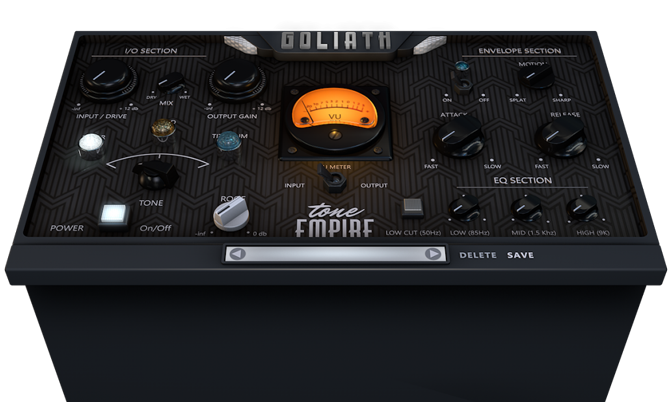
The FET compressor in Goliath V3 is a full dynamics processor built into the plugin. You get Attack and Release controls plus a Roof control that acts as the compression threshold. The Motion controller is the standout feature of this section. Set it to Splat and you get typical bus compression behavior. Set it to Sharp and the saturation is pushed toward the peaks and transients of the signal. This gives you control over where the harmonic distortion lands in the dynamic range. The FET section can produce anything from subtle transient control to heavy pumping compression depending on how you set the Roof. A simple on and off switch lets you dial in the saturation first and then engage the compressor section separately.
3-Band EQ with Low Cut Filter
The 3-Band EQ is the final stage of the Goliath V3 signal chain. It is analog modeled and designed to complement the saturation and compression sections rather than work in isolation. The Low Cut Filter removes unwanted sub-frequency buildup before it enters the saturation stage. This prevents low-end muddiness when pushing the Drive control hard. The three EQ bands cover the low, mid, and high frequency ranges with enough range for tonal shaping without replacing a dedicated mastering EQ. Together with the saturation and FET sections, the EQ completes the channel strip signal chain.
Drive Control and Input Level
The Drive control sets the amount of signal hitting the saturation engine. At low settings, Goliath V3 adds subtle harmonic color. At higher settings, it produces clear, audible saturation and harmonic distortion. This range makes the plugin usable on any type of material. You can add a gentle warm glow to a vocal track at low Drive settings. You can push a drum bus into aggressive saturation at higher settings. The Input and Output level controls let you match gain across the plugin so you are comparing the processed sound against the dry signal at equal loudness.
Multi Convolution and Component Modelling Engine
This is the core technology behind Goliath V3. Tone Empire recorded real hardware gear at multiple input levels using their proprietary Multi Convolution technique. These recordings capture how the hardware changes its character as it is driven harder. Component Modelling recreates the individual electronic components of the hardware in the digital domain. The combination of both methods produces a saturation plugin that responds to input level and Drive settings the way real hardware does. Earlier versions of Goliath used standard DSP saturation algorithms. V3 replaces these entirely with the Multi Convolution engine. The difference is audible from the first listen.
Performance on Mac
Goliath V3 is a Universal 2 Binary plugin. It runs natively on Apple Silicon without Rosetta 2 translation. This means zero compatibility overhead on M1, M2, M3, and M4 Macs. CPU usage is low per instance. The plugin is stable across Logic Pro, Pro Tools, Ableton Live, Cubase, Studio One, and Reaper on macOS. Logic Pro users can run the plugin in AU format. Pro Tools users load it as AAX. All other Mac DAWs use VST3. The installer package handles all three formats in a single installation step. There are no reported stability issues on current macOS versions.
Conclusion
Tone Empire Goliath V3 is the most complete analog channel strip plugin available for Mac at its price point. It replaces your saturation plugin, your coloring compressor, and your tone-shaping EQ with a single well-designed signal chain. The Multi Convolution engine makes it sound like real hardware. The four saturation modes give you genuine tonal choice. The FET compressor and 3-Band EQ complete the workflow. If you are a Mac producer or mix engineer who wants analog character without the overhead of a hardware rack, Goliath V3 is the plugin you have been looking for.
Key Features of Tone Empire Goliath V3 for Mac
- Four analog saturation models: Alloy, Tube, Tape, and Vinyl
- Powered by Multi Convolution and Component Modelling technology
- Full FET Compressor with Attack, Release, Roof, and Motion controls
- 3-Band analog-modeled EQ with Low Cut Filter
- Drive control for subtle warmth to aggressive saturation
- Universal 2 Binary format: native Apple Silicon and Intel Mac support
- Available as AU, VST3, and AAX plugin formats on macOS
- Compatible with Logic Pro, Pro Tools, Ableton Live, GarageBand, Studio One, Cubase, and Reaper
Technical Details
- Full Name: Tone Empire Goliath V3
- Setup File Name: GoliathV3_OSX
- Full Application Size: 82 MB
- Setup Type: AU, VST3, AAX
- Latest Version: 1.0.0
- Developer: Tone Empire
System Requirements
- Operating System: macOS 10.13 (High Sierra) or later
- Memory (RAM): 2 GB minimum
- Hard Disk Space: 100 MB
- Processor: Apple Silicon (M1, M2, M3, M4) Native or Intel Core 64-bit
Frequently Asked Questions
What is Tone Empire Goliath V3?
Tone Empire Goliath V3 is an analog channel strip plugin for Mac. It combines four saturation models, a FET compressor, and a 3-Band EQ into one plugin. It is powered by the Multi Convolution and Component Modelling engine that simulates real analog hardware chains.
Does Tone Empire Goliath V3 work on Mac?
Yes. Goliath V3 is fully compatible with macOS 10.13 High Sierra and all newer versions. It ships as a Universal 2 Binary. It runs natively on both Apple Silicon and Intel Macs. It supports AU, VST3, and AAX plugin formats.
Is Goliath V3 compatible with Logic Pro on Mac?
Yes. Goliath V3 includes the Audio Units format. This is Logic Pro’s native plugin format. Install the plugin using the macOS PKG installer and it appears automatically in the Logic Pro plugin library.
What are the four saturation models in Goliath V3?
The four models are Alloy, Tube, Tape, and Vinyl. Alloy is based on a British 1081 console transformer chain. Tube uses a valve processing chain with an AIR circuit. Tape is captured from an ATR-700 tape recorder. Vinyl is modeled on a Neumann vinyl cutting machine mastering chain.
What is the difference between Goliath V2 and V3?
The main difference is the sound engine. V3 uses the Multi Convolution and Component Modelling engine. This replaces the DSP-based algorithms in V2. The result is a more accurate simulation of real hardware behavior, especially when the Drive control is pushed hard.
How many machines can I use Goliath V3 on?
One license activates Goliath V3 on up to three machines at the same time. This covers a studio desktop, a MacBook, and a home setup without needing additional licenses.
Is there a free trial for Tone Empire Goliath V3?
Yes. Goliath V3 runs in demo mode without a license. In demo mode, the plugin outputs silence for three seconds every thirty seconds. Purchasing a license and registering the plugin removes this limitation.
What plugin formats does Goliath V3 support on Mac?
Goliath V3 supports AU, VST3, and AAX formats on Mac. AU works in Logic Pro and GarageBand. AAX works in Pro Tools. VST3 works in Ableton Live, Cubase, Studio One, Reaper, and all other VST3 compatible Mac DAWs.
Download Tone Empire Goliath V3 v3.1.0 for Mac
Click the button below to start the Tone Empire Goliath V3 download for Mac. This is the full latest version of Goliath V3 for macOS.