Download dGB Earth Sciences OpendTect 2026 full latest version program free setup for Windows.
dGB Earth Sciences OpendTect Review
dGB Earth Sciences OpendTect is a seismic interpretation and geoscience software platform for working with 2D and 3D seismic data. It is designed for geoscientists, geophysicists, researchers, and students who need to visualize seismic information, interpret geological structures, analyze attributes, and work with well data. OpendTect combines an open-source core with commercial Pro features and plugins for more advanced workflows. The software is useful across exploration and research workflows where seismic interpretation is important. Users can work with seismic volumes, horizons, faults, wells, attributes, and other geological data. Its plugin system also adds tools for machine learning, fault and fracture analysis, sequence stratigraphy, inversion, and other specialized tasks.
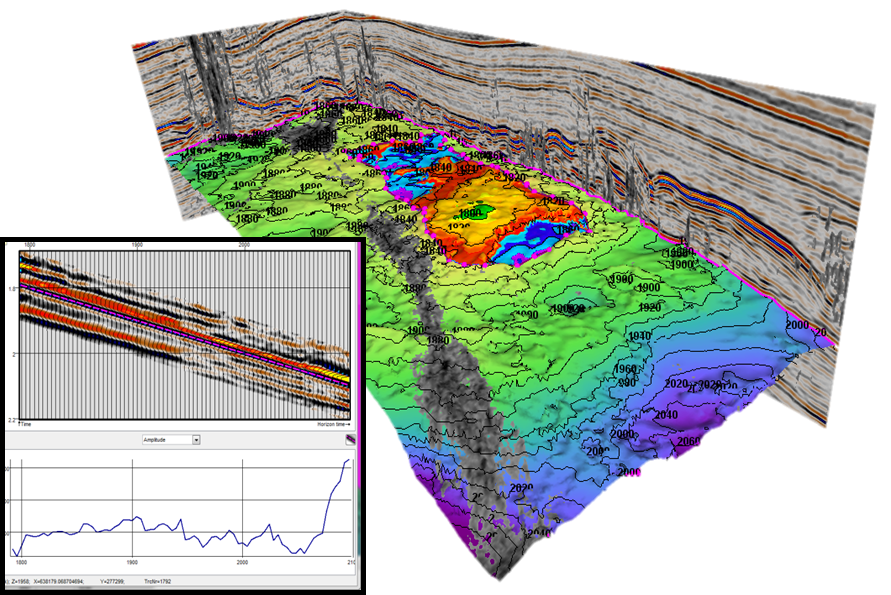
OpendTect is built around seismic interpretation, rather than general-purpose geological modeling. Its workspace allows users to display and investigate seismic data while creating interpretations such as horizons and faults. It also provides interactive attribute analysis and tools for examining geological features within seismic volumes. One of its useful areas is seismic attribute analysis. Attributes can help users examine patterns and features that may not be obvious in the original seismic data. OpendTect also supports spectral decomposition, horizon tracking, and other interpretation workflows that can help researchers study subsurface structures. The software can handle both 2D and 3D seismic data, along with well information. This makes it suitable for projects where seismic interpretation needs to be connected with well logs and geological information.
The Pro version adds a Well Correlation Panel for correlating well markers with seismic evidence. OpendTect also has a strong plugin system. The available plugins cover areas such as Dip Steering, HorizonCube, sequence stratigraphic interpretation, faults and fractures, machine learning, well correlation, and rock-property modeling. This allows users to extend the basic platform according to their research or interpretation needs. The Machine Learning plugin is particularly useful for users who want to combine seismic interpretation with Python-based machine learning workflows. dGB says the plugin connects OpendTect Pro with Python, TensorFlow, Keras, and Scikit-learn for seismic, well, and seismic-to-well applications.
Another useful feature is PetrelDirect in OpendTect Pro. It allows supported data to be accessed from Petrel projects or copied into OpendTect. Supported objects include 2D and 3D seismic, horizons, faults, wavelets, and well information. Data can also be exported back to Petrel for supported workflows. The platform also supports specialized interpretation workflows. For example, Faults & Fractures provides tools for analyzing faults and fractures, while HorizonCube can create a dense set of correlated stratigraphic surfaces. These features are useful when a project requires more detailed interpretation than basic seismic viewing.
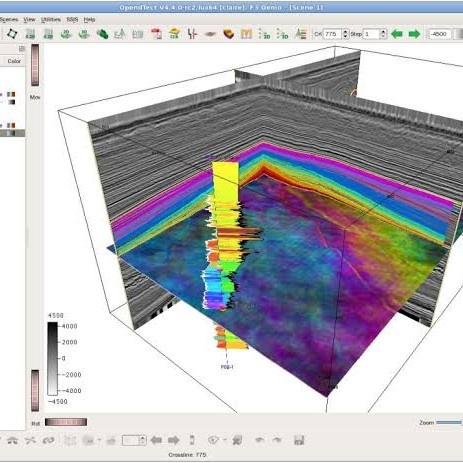
OpendTect has also continued receiving improvements to its interface and workflows. Recent release information includes improvements to 2D viewers, annotations, zooming, color tables, well import, Python integration, and PetrelDirect workflows. The main drawback is the learning curve. OpendTect is designed for specialized geoscience work, so beginners may need time to understand surveys, seismic attributes, interpretation tools, plugins, and data workflows. The number of available extensions can also make the software feel complex if you only need basic seismic viewing.
Key Features
- 2D and 3D seismic interpretation
- Seismic data visualization
- Interactive seismic attribute analysis
- Spectral decomposition
- Horizon tracking
- Fault interpretation
- Well data and well-log workflows
- Well-to-seismic correlation
- Dip Steering
- HorizonCube
- Sequence stratigraphic interpretation
- Fault and fracture analysis
- Machine learning workflows
- Python integration
- TensorFlow, Keras, and Scikit-learn integration
- Rock-property and inversion workflows
- PetrelDirect integration in OpendTect Pro
- Basemap and mapping tools
- PDF 3D visualization
- Ray-tracing tools in Pro
- Support for specialized geoscience plugins
- Open-source core with commercial Pro extensions
Alternatives
OpendTect is part of a specialized group of seismic interpretation and geoscience applications. The alternatives differ considerably in their focus, workflow, and level of integration.
Petrel E&P Software Platform is a major alternative for organizations that want a broader exploration and production environment. Petrel brings geological, geophysical, reservoir, and modeling workflows into a larger integrated platform. OpendTect can also exchange supported data with Petrel through PetrelDirect, which can be useful when both applications are part of the same workflow.
IHS Kingdom is another established option for seismic and geological interpretation. It provides tools for seismic interpretation, geological analysis, and related exploration workflows. It is commonly considered alongside OpendTect when organizations need dedicated interpretation software.
GeoTeric focuses strongly on seismic interpretation and attribute analysis. It can be considered by users who need advanced interpretation and visualization workflows for seismic datasets.
PaleoScan is another seismic interpretation platform, particularly suited to volume-based seismic interpretation and geological model building. It can be useful when the workflow requires extensive interpretation of seismic volumes and geological structures.
Surfer takes a different approach and is more focused on mapping, contouring, surface modeling, and geological data visualization. It can be useful for users whose work is centered around maps and surfaces rather than full seismic interpretation. G2 lists Surfer among the software commonly compared with OpendTect.
Leapfrog Geo is more focused on 3D geological modeling than traditional seismic interpretation. It can be useful for geologists who need to build and explore geological models from boreholes, geological observations, and other data sources.
For users who mainly need open and extensible seismic interpretation, OpendTect has an important advantage because its core is open source and can be extended with plugins. For broader integrated exploration workflows, Petrel or Kingdom may be more appropriate. For geological modeling, Leapfrog Geo offers a different workflow, while Surfer is more focused on mapping and surface visualization.
Conclusion
dGB Earth Sciences OpendTect is a specialized Windows solution for seismic interpretation and geoscience research. Its combination of 2D and 3D seismic visualization, attribute analysis, horizon and fault interpretation, well workflows, and expandable plugins makes it useful for professional and academic projects. Its Pro ecosystem adds tools such as PetrelDirect, advanced mapping, PDF 3D, ray tracing, and specialized interpretation plugins. The machine learning integration is also useful for teams that want to connect seismic interpretation with Python and modern machine learning libraries. OpendTect is not aimed at casual users. It makes the most sense for geoscientists, geophysicists, researchers, and students who regularly work with seismic and subsurface data. Users who need a broader exploration platform or a dedicated geological modeling environment may want to compare it with Petrel, Kingdom, Leapfrog Geo, or other specialized solutions before choosing a workflow.
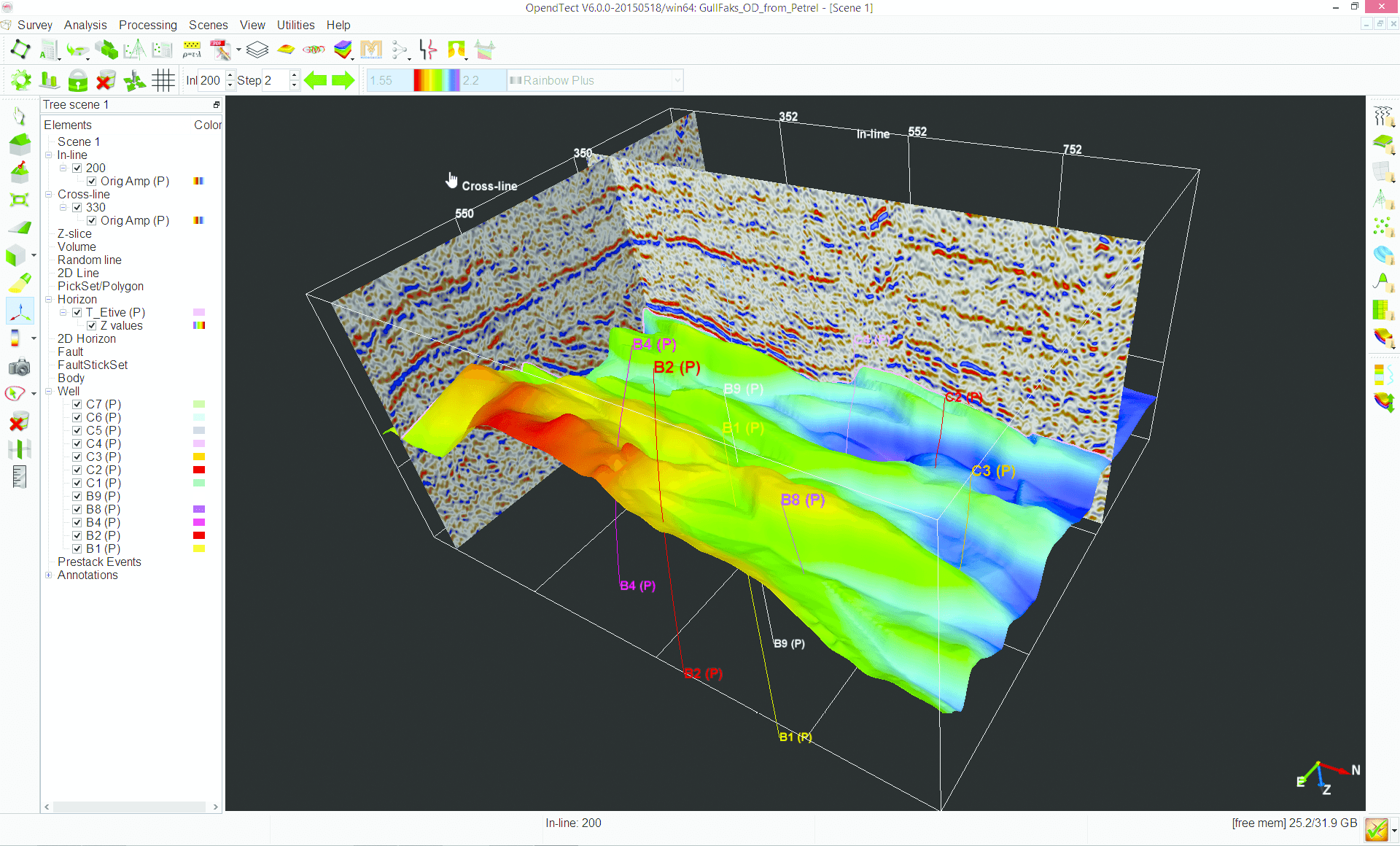
dGB Earth Sciences OpendTect 2026 Technical Setup Details
- Software Full Name: dGB Earth Sciences OpendTect 2026
- Setup File Name: dGB_Earth_Sciences_OpendTect_v7.0.2.rar
- Setup Size: 5.9 GB
- Setup Type: Offline Installer / Full Standalone Setup
- Compatibility Mechanical: 32 Bit (x86) / 64 Bit (x64)
- Latest Version Release Added On: 13th Sep 2026
- Developers: dGB Earth
System Requirements for dGB Earth Sciences OpendTect 2026
- Operating System: Windows 7/8/10
- RAM: 16 GB
- Hard Disk: 10 GB
- Processor: Intel Dual Core or higher processor
dGB Earth Sciences OpendTect 2026 Download
Download dGB Earth Sciences OpendTect 2026 free latest full version offline direct download link for full offline setup by clicking the button below.