Download Alpha Labs De-Feedback V1 for Mac Free. It is full Latest Version setup of Alpha Labs De-Feedback V1 DMG for Mac OS X.
Alpha Labs De-Feedback V1 for Mac Review
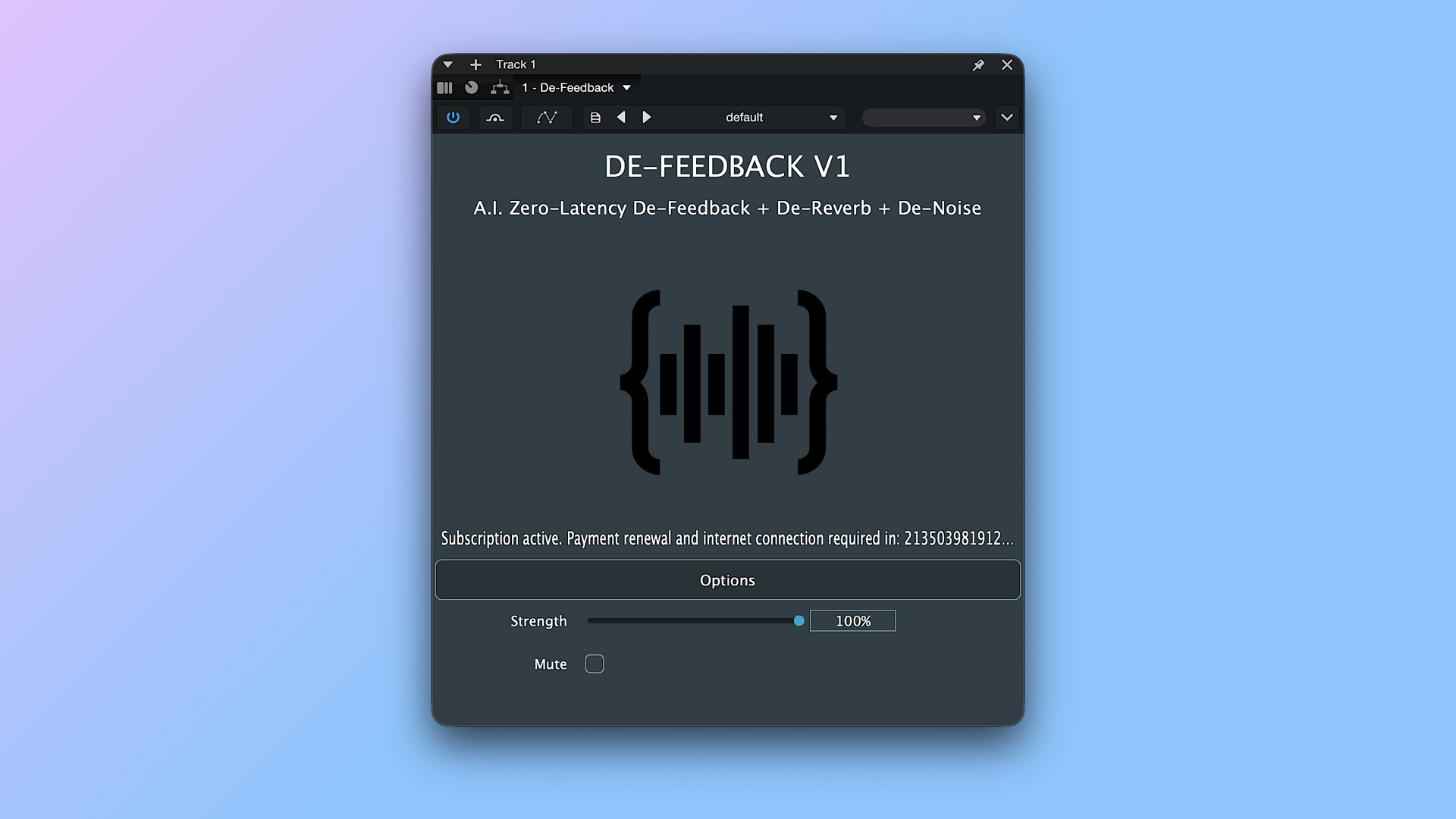
Alpha Labs De-Feedback V1 is an audio plugin designed to reduce microphone feedback, room reverb, and unwanted background noise. It uses a custom AI model to process vocal signals in real time, making it particularly useful for live sound engineers, singers, presenters, and audio professionals.
Microphone feedback is a common problem during live performances. It happens when sound from a loudspeaker reaches a microphone and creates an unwanted ringing or howling noise. Traditional solutions often involve cutting specific frequencies with an equalizer or reducing microphone volume. De-Feedback takes a different approach by using AI to recognize and reduce feedback while working to preserve the natural vocal sound. The plugin is mainly calibrated for individual speech and singing vocals. Alpha Labs also says it can work with choirs, although performance may vary when several voices are active at once.
Zero-Latency Audio Processing
One of the main features of De-Feedback V1 is its zero-added-latency processing. This is important for live performances because singers and speakers need to hear their voices without noticeable delays.
The plugin processes the incoming signal to identify feedback, room reverb, and background noise. According to Alpha Labs, its AI model was trained using large amounts of customized audio data to recognize these unwanted elements and reduce them in real time.
Zero plugin latency does not mean your entire audio setup has no delay. Your Mac, audio interface, buffer settings, and connection method can still introduce round-trip latency. This is particularly important when using the plugin for live monitoring.
For musicians and sound engineers, the advantage is that De-Feedback can be inserted into a vocal channel without adding processing delay of its own.
Reduce Microphone Feedback Without Heavy EQ Cuts
Traditional feedback control often involves identifying problematic frequencies and reducing them with narrow equalizer cuts. This can work, but several aggressive cuts may change the overall character of a vocal signal.
De-Feedback aims to reduce the need for these repeated EQ adjustments. Its AI processing listens for feedback patterns and attempts to remove them without significantly changing the vocal tone.
This can be useful in venues where microphones and loudspeakers are positioned close together or where room acoustics make feedback difficult to control.
However, the plugin does not guarantee that feedback will disappear in every situation. Alpha Labs explains that sufficiently high gain can still overwhelm the processing. Good microphone placement, speaker positioning, and sensible gain settings remain important.
Room Reverb and Background Noise Reduction
Feedback is not the only problem De-Feedback is designed to address. It also works to reduce room reverb and background noise in vocal recordings.
Room reverb can make speech sound distant or unclear, especially in reflective spaces. Background noise from an audience, nearby equipment, or the surrounding environment can also make live vocals harder to understand.
De-Feedback attempts to separate the direct vocal signal from these unwanted elements. This makes it useful for live speech, singing, presentations, and other situations where vocal clarity matters.
The developer recommends using a microphone signal that contains more direct sound than room ambience. If the microphone captures too much background noise or distant room sound, the plugin may not perform as intended.
Strength Control and Mute Option
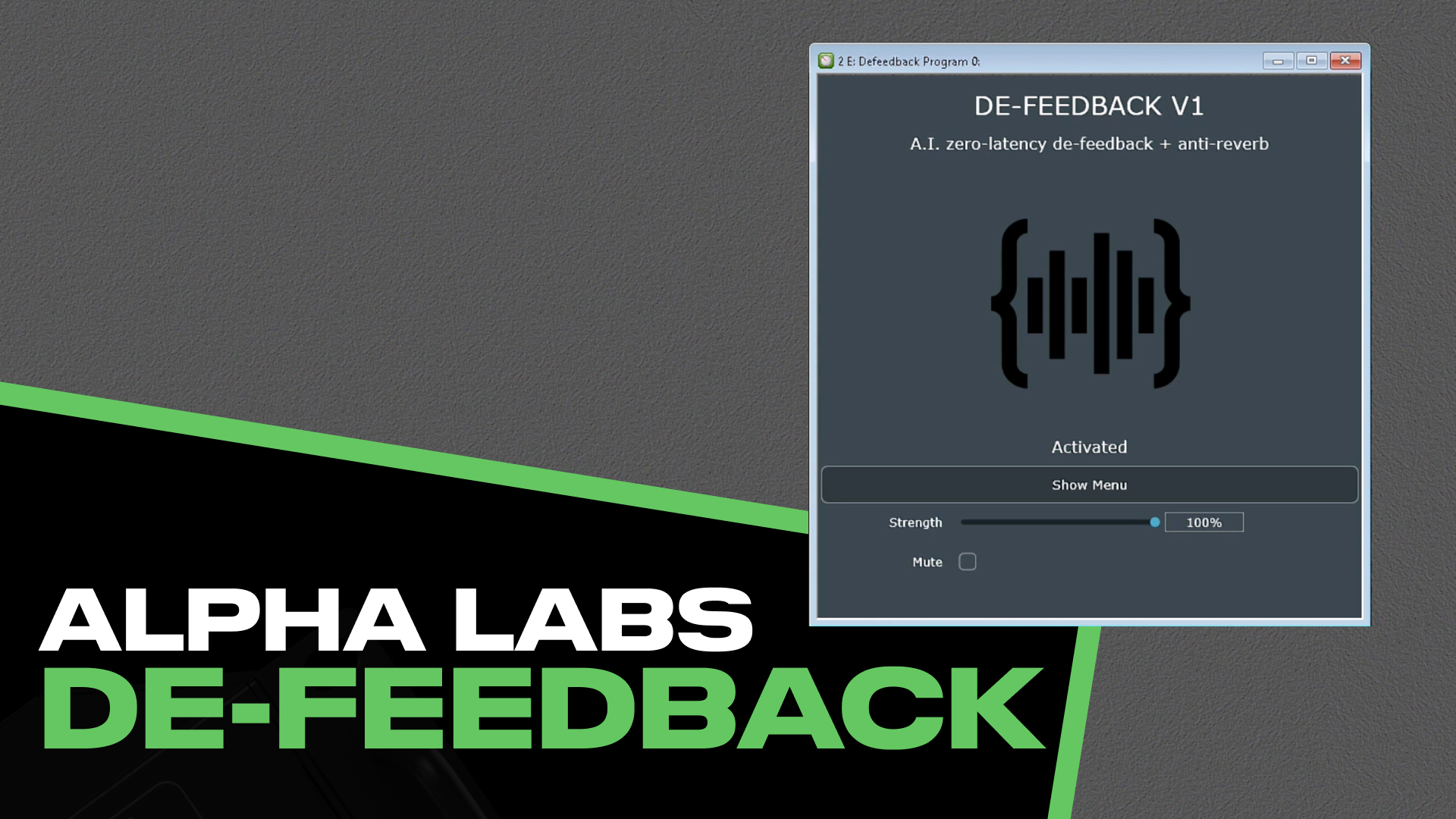
De-Feedback includes a Strength control that adjusts how much processing is applied. At 0%, the signal remains unprocessed, while 100% represents full processing.
Alpha Labs recommends using 100% for normal operation. The company also increased the available strength range in version 1.1.4, meaning the current 80% setting corresponds to the previous 100% setting.
A Mute button is also available for checking the signal path and troubleshooting audio routing. This is helpful when setting up the plugin in a DAW or live audio system.
The interface is intentionally focused on its main processing task rather than providing a large collection of controls. Users who prefer simple vocal processing may appreciate this approach.
Mac Performance and Apple Silicon Support
Alpha Labs provides a dedicated Mac installer for De-Feedback V1. Its FAQ specifically recommends the AU version on an Apple Silicon Mac as an option for users who want to run the plugin on their own computer.
The developer also acknowledges that Mac performance is not guaranteed in the same way as its verified dedicated hardware platforms. The plugin can place a heavy load on the CPU, particularly when low latency is required.
Version 1.1.3 addressed CPU usage problems on Mac, especially with the AU format. The following version, 1.1.4, released on June 12, 2026, included further Mac CPU improvements, a persistent level meter, licensing changes, and minor interface and stability updates.
Mac users should test the available version on their own system before relying on it during a live event. The official website does not publish a universal minimum macOS version or guarantee performance across every Mac configuration.
AU and VST3 Compatibility
The Mac version includes an AU option, which is useful for compatible audio applications such as Logic Pro. The developer’s version history also references a Mac VST3 beta.
AAX and Linux support are not listed by the developer. If your recording setup depends on a specific plugin format, check the current installer and host compatibility before purchasing.
For live sound applications, the most important consideration is not just whether the plugin loads in your DAW. You should also check whether your Mac and audio interface can process the signal reliably at the buffer size required for your performance.
Activation and License Management
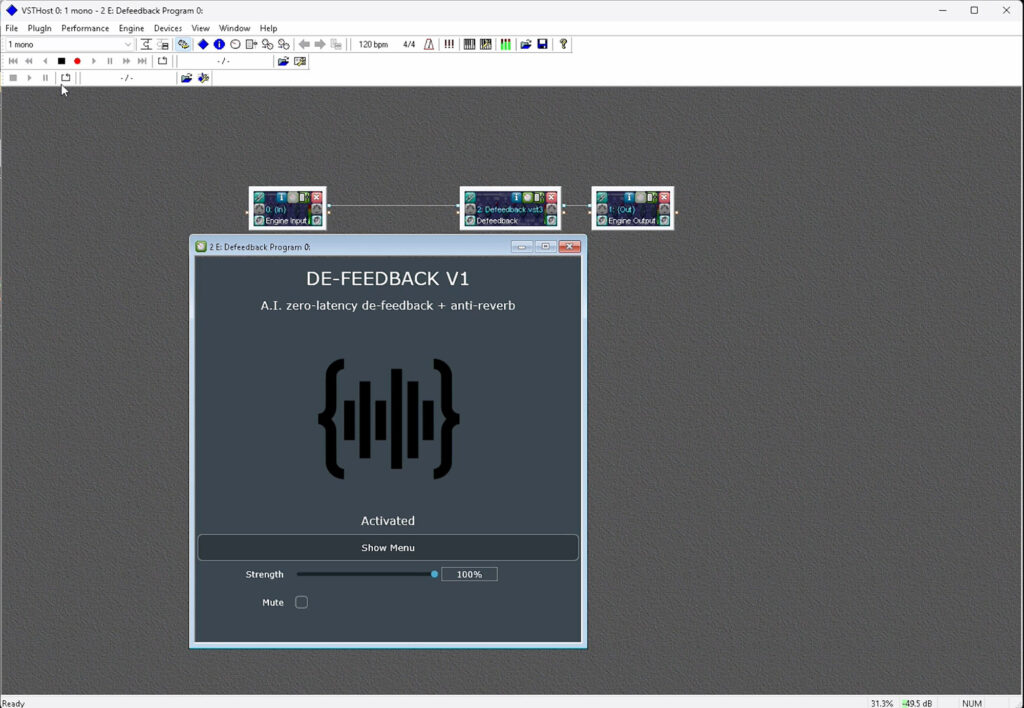
De-Feedback V1 uses machine-based license activation. The license is linked to hardware identifiers on the computer where you activate it.
The developer allows license transfers between machines, but recommends deactivating the existing installation before major operating system changes or hardware repairs. It also warns against using virtual machines or operating systems running from external portable drives because their hardware identifiers may change.
A perpetual license covers the Version 1.x series, including its patches and minor updates. Major version upgrades may require a separate license.
Alpha Labs offers a trial download, but the unactivated version introduces periodic audio dropouts. This gives users a way to check compatibility and processing behavior before committing to a license. The developer states that license sales are final, so testing first is particularly important.
Key Features of Alpha Labs De-Feedback V1
- AI-based microphone feedback reduction.
- Zero-added-latency plugin processing.
- Room reverb and background noise reduction.
- Designed mainly for individual speech and singing vocals.
- Strength control from unprocessed to fully processed.
- Built-in Mute button for signal-path troubleshooting.
- Mono and stereo operation.
- Support for normal sample rates from 44.1 kHz to 96 kHz.
- Full-range audio throughput.
- Mac AU version available.
- Mac VST3 beta referenced in the version history.
- Apple Silicon Mac recommended by the developer as an option.
- Machine-based activation with license transfer support.
- Version 1.1.4 includes further Mac CPU improvements.
Best Alternatives to Alpha Labs De-Feedback V1
1. T-Sound Feedback Killer AI
T-Sound Feedback Killer AI is a direct alternative for users who want automatic feedback reduction on live vocal and speech microphones. It uses AI to identify and control feedback without depending entirely on manual equalizer adjustments.
The plugin is available for macOS in AU and VST3 formats. Its main purpose is to control feedback during live sound applications, making it relevant to singers, presenters, and sound engineers.
Compared with Alpha Labs De-Feedback, Feedback Killer AI offers another approach to automatic feedback control. It is worth comparing if you want a dedicated feedback-reduction tool and prefer a separate product designed around live microphone use.
Choose Feedback Killer AI if your main requirement is automatic feedback suppression with Mac plugin support.
2. Waves X-FDBK
Waves X-FDBK is a live sound feedback suppression plugin that identifies frequencies causing feedback and reduces them using automatic notch filters.
It can create up to 20 filters and automatically adjust their bandwidth and depth. This makes it useful for ringing out monitors and controlling feedback during live performances.
The main difference is the processing approach. X-FDBK focuses on identifying and reducing specific feedback frequencies, while De-Feedback uses AI to process feedback, room reverb, and background noise in the vocal signal.
Choose Waves X-FDBK if you prefer a more frequency-focused feedback control system for live sound.
3. iZotope RX 12
iZotope RX 12 is a broader audio repair and restoration suite for recording professionals, editors, and content creators. It includes tools for reducing unwanted noise, hum, room reverb, and other recording problems. Its Voice De-noise and De-reverb tools can help clean up vocal recordings. Other modules provide additional repair options for dialogue and recorded audio.
However, RX 12 is not a direct replacement for De-Feedback’s real-time live feedback suppression. Its main strength is audio repair and post-production rather than controlling microphone feedback during a performance. Choose RX 12 if your priority is cleaning recorded vocals, dialogue, and other audio rather than managing feedback on a live microphone.
Conclusion
Alpha Labs De-Feedback V1 is a specialized audio plugin for reducing microphone feedback, room reverb, and background noise. Its AI-based processing and zero-added-latency design make it particularly interesting for live sound engineers, singers, and professionals who need clearer vocal signals. Its main strength is its focus on vocal processing. Instead of relying entirely on repeated EQ cuts, it attempts to identify unwanted feedback and room noise while preserving the natural sound of speech and singing.
There are some limitations to consider. The current version is best suited to individual vocals, can struggle when pushed beyond its feedback-control limits, and may place a significant load on a Mac’s CPU. Apple Silicon users have an option recommended by the developer, but performance is not guaranteed on every system. Overall, Alpha Labs De-Feedback V1 is worth considering if you need specialized vocal feedback reduction on a Mac. If you mainly want traditional frequency-based feedback control, Waves X-FDBK is a useful alternative. For cleaning recorded audio after a session, iZotope RX 12 offers a broader set of tools.
Technical Details
- Full Name: Alpha Labs De-Feedback V1
- Setup App File Name: Alpha Labs De-Feedback V1
- Full Application Size: 28 NB
- Latest Version: 1.1.4
- Setup Type: AU, VST3
- Developers: Alpha Labs
System Requirements
- Operating System: macOS 11 (Big Sur) or later
- Memory (RAM): 4/8 GB
- Hard Disk Space: 59.6 MB
- Processor: Apple Silicon (M1-M6 or newer) and Intel Core (64-bit)
Download Alpha Labs De-Feedback V1 Latest Version Free
Click on the button below to start Alpha Labs De-Feedback V1 Download for Mac OS X. This is completely Tested and Working Latest Version Mac OS App of Alpha Labs De-Feedback V1. It is offline installer and standalone setup for Alpha Labs De-Feedback V1 for Apple Macintosh. We provide Resumeable single direct link Alpha Labs De-Feedback V1 Download for Mac.