Download Martinic Prodigy for Mac Free. It is full Latest Version setup of Martinic Prodigy DMG for Mac OS X.
Martinic Prodigy 2026 for Mac
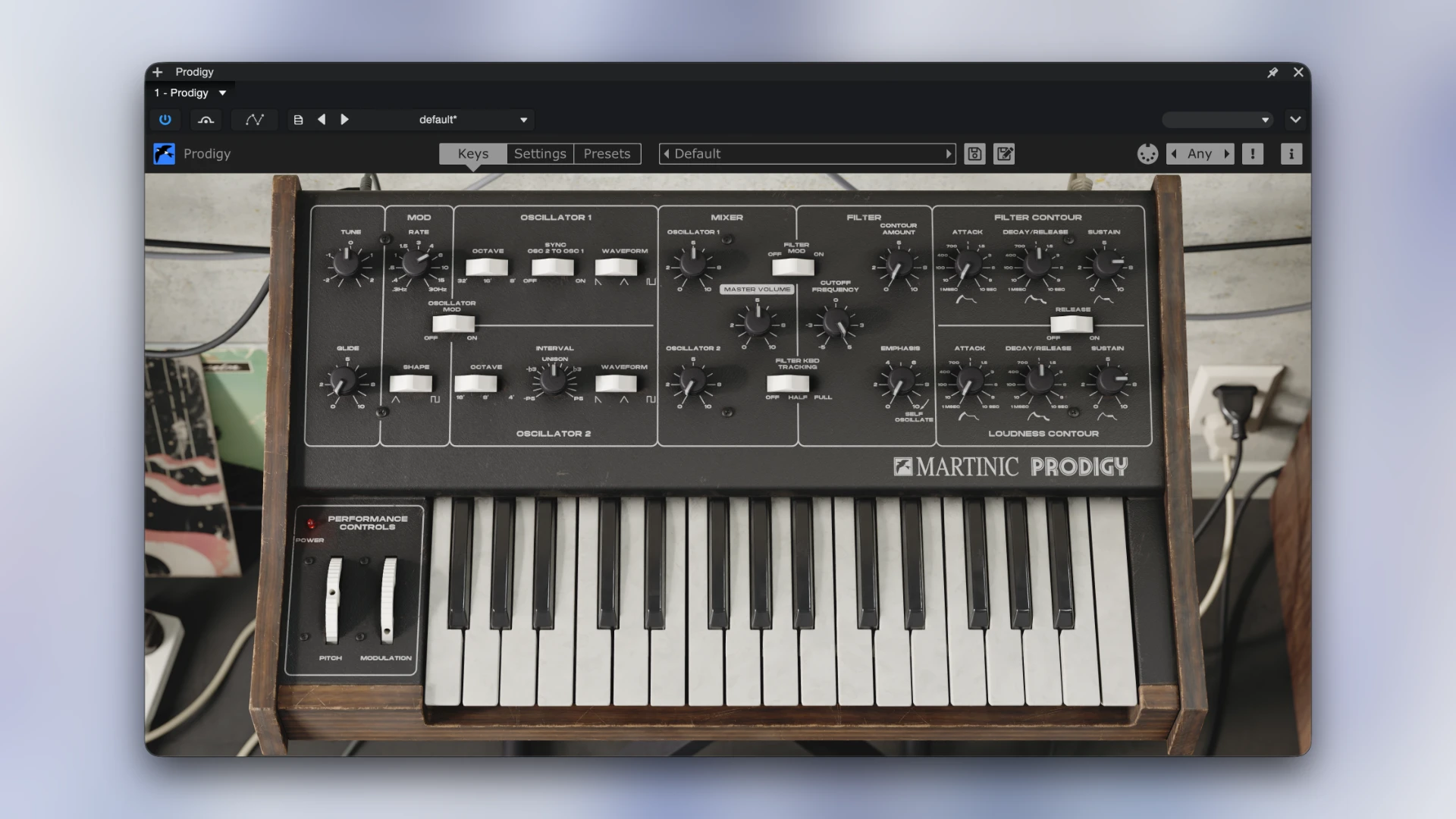
Martinic Prodigy 2026 is a virtual analog synthesizer plugin for Mac that recreates the sound and architecture of the classic 1979 Moog Prodigy. It uses Martinic’s Advanced Circuitry Emulation technology to model the original analog circuitry while adding features that were not available on the vintage hardware. The plugin is designed for modern music production and works inside DAWs such as Logic Pro, GarageBand, Ableton Live, Cubase, REAPER, and Pro Tools. The latest release is version 1.0.0, released on September 3, 2026. It supports both Intel Macs and native Apple Silicon Macs.
What Is Martinic Prodigy?
Martinic Prodigy is a software recreation of the classic Moog Prodigy, a monophonic analog synthesizer originally released in 1979. The original hardware was known for its simple two-oscillator design, hard sync, glide, and aggressive ladder-filter sound. Martinic keeps these core characteristics but expands the instrument for modern DAW production. The result is more than a basic vintage synth recreation. You can use the classic architecture for basses and leads or switch to polyphonic and unison modes for wider modern sounds.
ACE Circuit Modeling
One of the main selling points of Martinic Prodigy is its Advanced Circuitry Emulation, or ACE, technology. Instead of simply playing sampled sounds, the plugin models the behavior of the original analog circuitry. This allows the oscillators, filter, modulation, and other parts of the synthesizer to respond like an instrument rather than a fixed collection of audio samples. This approach is useful for sound designers who want to change oscillator settings, filter movement, modulation, and pitch behavior while creating their own patches.
Two-Oscillator Synth Architecture
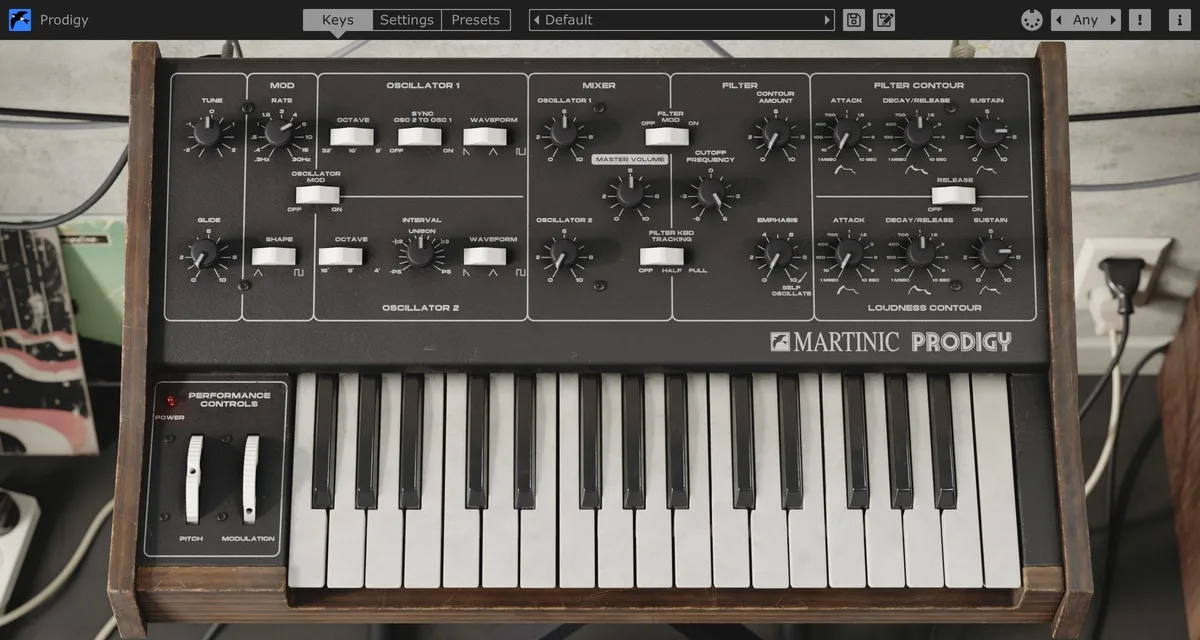
The core of Martinic Prodigy is its two-oscillator design. The oscillators provide different waveform options, octave settings, pitch adjustment, mixing, modulation, and hard synchronization. This gives you the basic ingredients needed for the classic Prodigy bass and lead sound.
The second oscillator can be synchronized with the first, producing the distinctive tonal movement associated with the original instrument. You can also adjust pulse width and modulation depth, which gives the software version more sound-design flexibility than the original hardware.
Hard Sync for Aggressive Leads
Hard sync is one of the most important features of the original Prodigy sound. When oscillator synchronization is enabled, the second oscillator follows the cycle of the first. Changing its pitch creates strong harmonic changes rather than simply making the sound higher or lower. This makes hard sync particularly useful for aggressive leads, electronic effects, and moving synth sounds. The original Prodigy became known for this type of pitch-wheel-driven sync sound, and Martinic includes the same basic behavior in its software recreation.
Ladder Filter
Martinic Prodigy includes a 24 dB/octave low-pass ladder filter, based on the filter architecture of the original synthesizer. The filter provides cutoff, emphasis, keyboard tracking, and modulation controls. You can use it to remove high frequencies, create darker basses, or increase resonance for more pronounced electronic sounds. Filter drive and emphasis boost are also included as modern additions.
Sub-Oscillator and Noise Generator
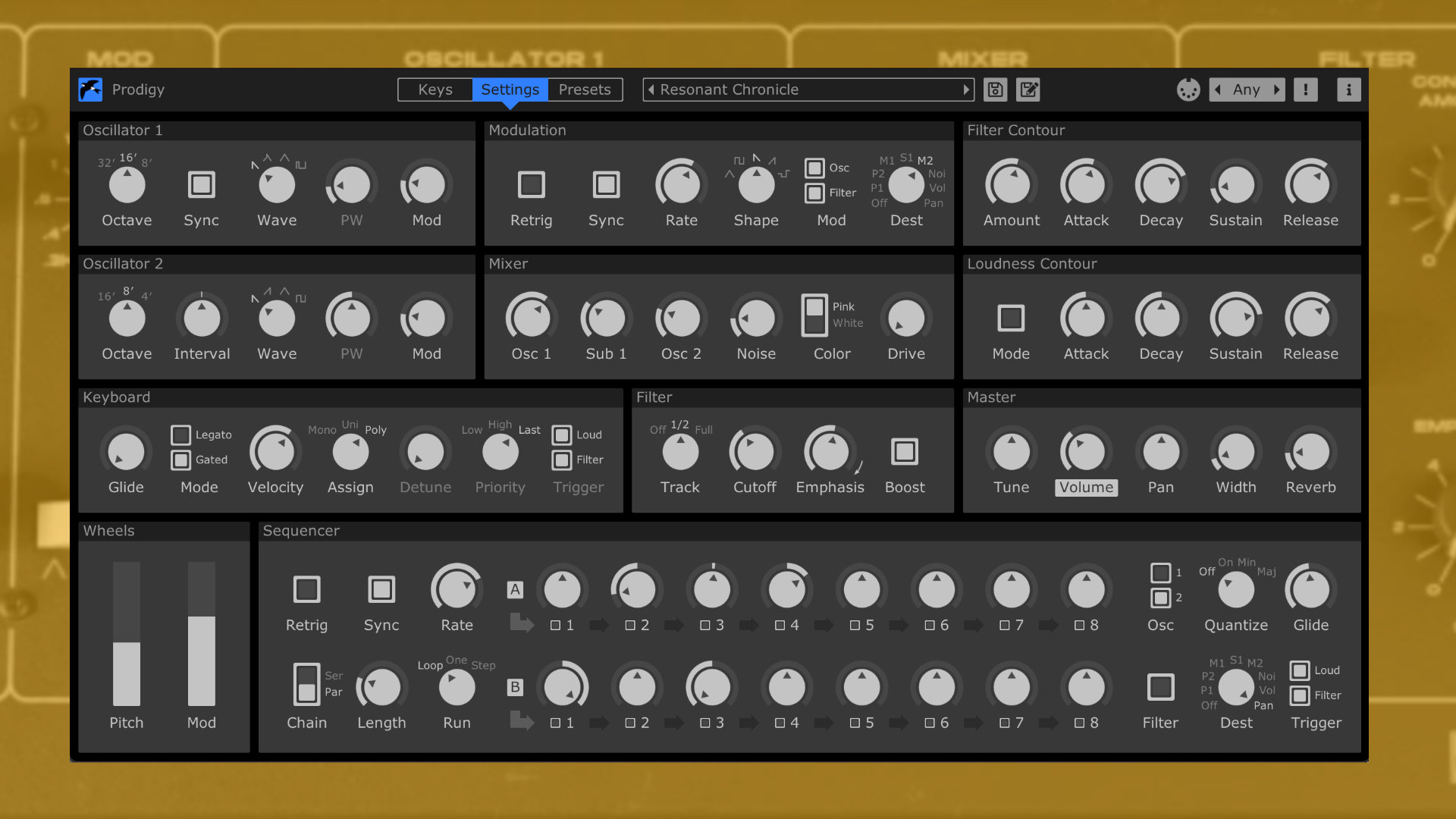
The original Prodigy design has been expanded with additional sound sources. Martinic adds a sub-oscillator for creating deeper bass tones. It also includes both pink and white noise generators. These additions make it easier to create sounds beyond the classic bass and lead patches. Noise can be useful for percussion-style effects, transitions, synthetic textures, and adding extra character to a patch.
Modulation Controls
Martinic Prodigy provides more modulation options than the original hardware. It includes five modulation waveform choices, tempo-synchronized modulation, modulation retriggering, and additional destinations such as pulse width, oscillator mix, volume, and pan. This allows the synth to produce both simple vintage sounds and more animated modern patches.
Polyphonic and Unison Modes
The original Prodigy was a monophonic synthesizer, but Martinic expands the software version significantly. The plugin offers 8-voice polyphony and 6-voice unison. Polyphonic mode allows you to play chords, while unison mode layers voices together and provides adjustable detuning and stereo spread. This makes Martinic Prodigy much more flexible than the original hardware. You can still use it as a focused mono synth, but you are not restricted to one note at a time.
Built-In Spring Reverb
Martinic also adds a vintage-style spring reverb. The reverb is inspired by the type of spring reverb associated with classic analog equipment. It can give basses, leads, effects, and sequences additional space without requiring another plugin. This is particularly convenient when you want to create a complete sound directly inside one instrument.
16-Step Analog Sequencer
The built-in sequencer is one of the biggest differences between Martinic Prodigy and the original instrument. It provides up to 16 steps and can operate as a single 16-step sequence or as two parallel 8-step sequences. The sequencer can control more than pitch. It can also affect oscillator settings, filter movement, pulse width, mix, volume, and panning. Tempo synchronization, retriggering, glide, and different playback modes are also available. This makes the plugin useful for repeating bass patterns, rhythmic melodies, electronic effects, and evolving sequences.
MPE Support
Martinic Prodigy includes MPE pitch-bend support. MPE-compatible controllers can send more detailed performance information for individual notes. This can provide additional control over pitch and expression when used with a compatible controller and DAW. For users who prefer traditional MIDI keyboards, the regular MIDI controls remain available.
300+ Factory Presets
The plugin includes more than 300 factory presets. These presets provide starting points for basses, leads, sequences, effects, and other electronic sounds. Martinic also provides additional Prodigy preset collections, including a collection based on Tom Rhea’s original Prodigy sound charts and other modern sound-design packs. The preset system is useful when you need to find a sound quickly rather than designing every patch from an initialized state.
MIDI Learn and DAW Control
Martinic Prodigy supports MIDI Learn, allowing controls to be assigned to compatible MIDI hardware. It also supports MIDI Program Change and sustain pedal control. Because it runs as a plugin inside a DAW, its parameters can be automated and saved with your project. This makes it easier to recall the same synth settings when reopening an old production.
Martinic Prodigy for Logic Pro
Mac users running Logic Pro can load Martinic Prodigy through its Audio Units (AU) format. This makes it suitable for creating basses, leads, sequences, pads, and electronic effects directly inside Logic projects. The plugin also supports AAX, CLAP, VST2, and VST3, so Mac users are not restricted to one DAW environment.
Martinic Prodigy for GarageBand
Because the plugin provides an AU version for macOS, it can also be used in compatible Audio Units hosting environments such as GarageBand. This gives Mac users a relatively simple way to experiment with the Prodigy sound without needing a dedicated hardware synthesizer.
Martinic Prodigy for Ableton Live
Ableton Live users can use the VST2, VST3, or AU version depending on their preferred plugin setup. The sequencer, modulation controls, MIDI Learn, and automation support make it particularly suitable for electronic music production. You can create a bass sequence inside Prodigy or let Ableton’s MIDI system control the instrument from an external clip.
Key Features of Martinic Prodigy 2026
- ACE-modeled recreation of the 1979 Prodigy circuitry
- Two modeled oscillators
- Hard oscillator sync
- 24 dB/octave ladder filter
- Variable keyboard glide
- Adjustable pulse width
- Sub-oscillator
- Pink and white noise generators
- Filter drive
- Filter emphasis boost
- Five modulation waveforms
- Tempo-synced modulation
- MPE pitch bend support
- 6-voice unison mode
- 8-voice polyphonic mode
- Adjustable detune and stereo spread
- Vintage spring reverb
- 16-step analog-style sequencer
- Parallel and serial sequencer modes
- MIDI Learn
- MIDI Program Change
- Sustain pedal support
- 300+ factory presets
- Native Apple Silicon support
- AU, AAX, CLAP, VST2, and VST3 formats
- No hardware dongle
Martinic Prodigy Alternatives
Arturia Mini V
Arturia Mini V is a software recreation of another classic Moog synthesizer, the Minimoog. It provides a larger feature set and more sound-design options than the original hardware-inspired architecture. It is a better option if you want a broader Moog-style instrument rather than specifically targeting the Prodigy sound.
u-he Repro-1
u-he Repro-1 is a software synthesizer inspired by classic analog monosynth designs. It focuses heavily on analog-style sound and detailed synthesis control. It is worth considering if you want another dedicated mono synth with a vintage character.
GForce Minimonsta
GForce Minimonsta is another software synthesizer focused on classic analog synth sounds. It combines vintage-inspired synthesis with modern modulation and performance features. It can be a useful alternative for producers who want a broader analog-style instrument.
TAL-BassLine-101
TAL-BassLine-101 is aimed at classic analog bass and lead sounds. Its simple workflow makes it suitable for users who want a focused synth without a large amount of complexity. It is especially relevant for producers who want classic mono synth sounds at a lower cost.
Conclusion
Martinic Prodigy 2026 for Mac is a focused virtual synthesizer for producers who want the character of the classic Moog Prodigy without relying on aging vintage hardware. Its biggest strength is the combination of the original two-oscillator architecture, hard sync, glide, and ladder filter with modern additions such as an 8-voice polyphonic mode, 6-voice unison, sub-oscillator, drive, spring reverb, MPE, and a 16-step sequencer.
For Mac users, compatibility is another strong point. Version 1.0.0 supports macOS 10.9 and newer, including native Apple Silicon, and provides AU, AAX, CLAP, VST2, and VST3 formats. If your main goal is basses, leads, hard-sync sounds, vintage electronic tones, and rhythmic sequences, Martinic Prodigy 2026 is a strong choice. If you need a much broader synthesizer architecture with extensive modulation and synthesis options, one of the alternatives may be a better fit.
Technical Details
- Full Name: Martinic Prodigy
- Setup App File Name: Martinic Prodigy
- Full Application Size: 83 MB
- Latest Version: 1.0.0
- Setup Type: AU, VST, VST3, CLAP
- Developers: Martinic
System Requirements
- Operating System: macOS 10.9 (Mavericks) or later
- Memory (RAM): 4/8 GB
- Hard Disk Space: 100 MB
- Processor: Apple Silicon (M1 and newer) or Intel (4 cores, 3.4 GHz)
Download Martinic Prodigy Latest Version Free
Click on the button below to start Martinic Prodigy Download for Mac OS X. This is completely Tested and Working Latest Version Mac OS App of Martinic Prodigy. It is offline installer and standalone setup for Martinic Prodigy for Apple Macintosh. We provide Resumeable single direct link Martinic Prodigy Download for Mac.